Pages

Showing posts with label Victorian novel. Show all posts

Thursday, September 15, 2016

Ayesha: The Return of She by H. Rider Haggard

Ayesha: The Return of She
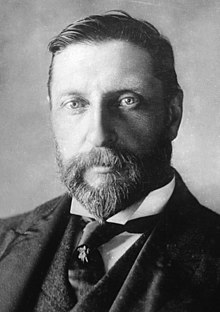
H. Rider Haggard
3/5 stars
H. Rider Haggard

She, the first volume of the "She" stories, ends with a thrilling conclusion.  Ayesha begins shortly after that, with Leo seeing a vision of where he can find Ayesha now.  He and Horace spend 16 years hunting for the place of the vision.  Leo faces a great trial, a fantastic battle occurs, and Haggard gives another of his excellent endings.

Ayesha is not as well-plotted, nor as exciting, as She.  At times, it seemed to lag, and I even found my attention roaming a bit in the middle.  The divinity and mortality of Ayesha , to my disappointment, was not resolved.  What I would really have liked was more of the 16 years of travel, and less of the daily life in the College of Hess.

The battle was excellent though, and the supernatural elements were just creepy enough to satisfy.  I also enjoyed the uncertainty of just where this story was going, of what Ayesha would do, and the tension this created.

I like Haggard's novels, and while this wasn't his best, it was still a good yarn.  I highly recommend She, and only then should Ayesha be read--with the understanding that it's just not as good.


Sunday, March 13, 2011

Three by Ella D'arcy

Ella D'Arcy
Ella D'Arcy (1856?-1939) is little known today, which is a shame as her prose is well-penned and thought provoking.  Unlike the more popular writers of the Victorian era, D'Arcy wrote with an abundance of realism and very little melodrama.  Her descriptions are beautiful as well as realistic, her characters flawed and believable, and her plots fluid and interesting.  There is little or no sensationalism, spiritualism or  mystery in her stories, just human drama or character studies that rarely conclude with a "happy" ending.  That D'Arcy produced only three volumes of fiction is a shame; she was a highly talented writer.

Monochromes
originally published 1895
4/5 stars

Monochromes is a set of six stories, too lengthy to be called short but not quite long enough to be novellas (novellettes?), and is D'Arcy's first published volume.  It also contains her only two "happy ending" stories.  On the whole, this set is well written and excellent, but not quite as good as her second volume of short fiction (Modern Instances), as some of the stories are more emotional and typically Victorian than her style is when it matures.

1. "The Elegie"  4/5 stars
This is well told story, though a bit dramatic, and creates a very vivid image of a young, spoiled man intent on getting his own way regardless of the consequences.  His pride and vanity is both repugnant and yet so believable as to make the reader slightly sorry for him--for after all, it could be anyone slipping into such a mess.  "The Elegie" is a well done character study with a conclusion that is sad and unforeseen.

2. Irremediable 5/5 stars
I first read this one in the story collection, Victorian Short Stories of Troubled Marriages and it was this story that caused me to want to read more by D'Arcy.

"Every affront or grievance, real or imaginary, since the day she and Willoughby had first met, she poured forth with a fluency due to frequent repetition, for, with the exception of today's added injuries, Willoughby had heard the whole litany many times before."

This is a well written story from beginning to end. D'Arcy describes her characters and their emotions effortlessly and intimately. The plot is gripping and emotional. The reader watches as Willoughby makes the mistake that will cost him his happiness, an inappropriate marriage, but D'Arcy's writing keeps the reader still hopeful til the last heart wrenching sentence.

3. Poor Cousin Louis 5/5 stars
This story is nearly a horror story, not because of any gore, violence or supernatural drama, but because the uncertainty of the outcome creates such tension.  D'Arcy creates such sympathy for the title character, Louis, and then leaves to it to the reader to imagine what will happen to him after the last sentence.  It was a truly terrible story, all the more so because it was so well written as to be a truly magnificent one.

4. The Pleasure Pilgrim 4/5 stars
This story might owe it's conception to James' novella Daisy Miller.  The plots are similar in that they both contain a flirtatious American girl on foreign soil, who finds that her attitude backfires for her.  With D'Arcy, the story is not so much a focus on social attitudes and manners (though it does contain that element) as it is about truth and deception and how does one know the truth.  D'Arcy writes a rather shocking tale (especially for the time) that ends tragically and with the reader, and the hero, still uncertain as to what was true and what was not.

5. White Magic 3/5 stars 
This short story is an odd tail about an Island girl (D'Arcy lived on the Channel Islands for some time) and how the English pharmacist was able to repair her romance through "magic".  At times D'Arcy seems to be deploring the modern girl with no superstitions and at other times she seems to be mocking those females who do have superstitions.  It was hard to see what point she was making in the story, but, as usual, the narrative and descriptions were wonderful.

6. The Expiation of David Scott 5/5 stars
This is a long story, told in several short chapters.  It deals with love, friendship and betrayal in some very unique (for the time) ways.  D'Arcy creates fantastically believable, flawed characters and a wonderfully tangled moral dilemma that keeps the reader worried and guessing until the very last sentence.


The Bishop's Dilemma
originally published 1898
5/5 stars


The Bishop's Dilemma   is D'Arcy's only full-length novel.  I do not know for a fact that she was a Roman Catholic, but can assume so from the sympathetic way she treats the religion in this novel.  As with many Victorian novels, religion is a matter of a fact in this novel, not something to add in or to be apologetic for, and readers should have that in mind when beginning this one. 

The Bishop in question is Bishop Wise, and he is not the main character of this novel, rather he is the initiator of the drama.  He is present in the first and last scenes, starting events that affect the physcial and mental well-being of our protagonist, Father Fayne.

Fayne is a young man born to middle class, but with the grace, looks and attitude of a nobleman.  This has made him unpopular in his two previous posting and the Bishop believes he has found just the perfect placement for him in the small town of Hattering, where Fayne would essentially be the private priest to Lady Welford and her household, and the two other Catholic families in the town.  Fayne's manners and ability make him popular and revered and the choice appears to have been a good one.

Sadly, no one can account for human nature, and painting the weaknesses of human nature is D'Arcy's strength.  It is not long before Fayne's private Paradise becomes Hell on earth and the reader must watch him spiral into depression and misery.  As is usual with D'Arcy, there is no happy ending, just one all too real.  While the conclusion is disappointing for the characters, it, and all of the Bishop's Dilema is an immensely satisfying experience for the reader.

Modern Instances
originally published 1898
5/5 stars

Sadly, as it is D'Arcy finest work, Modern Instances is no longer print and not even available in Public Domain eBooks.  I was able to order it through inter-library loan and borrow a copy from our local university.  This is a magnificent collection of seven novellettes (for lack of a better term) in which D'Arcy's considerable talent is visible in each story, each page, each paragraph.

1. At Twickenham 5/5 stars
This story tells of a man who is unknowingly controlled by his wife and sister-in-law, of the friendship he nearly looses as a result of their schemes.  The characterizations, emotions and reactions are fantastic, very real and believable.  The plot is solid and keeps the reader engaged and curious to the end.

2. A Marriage 5/5 stars
This is a though provoking and heart breaking story of a young man, Catterson, in a very difficult predicament, as seen through the eyes of his casual friend, West.  The story is in three parts, having West narrate three instances over the course of many years in which he saw Catterson and his wife.  D'Arcy tends to paint a glum view of marriage in general, and wives in particular, and this story is the apex of that view.  As depressing as it is, the story is incredibly well written and well worth reading.

3. An Engagement 5/5 stars
This story takes place on "the Islands", and D'Arcy describes the people and landscape excellently.  In contrast to the previous story, "An Engagement" shows the male half of a relationship in poor light.  Dr. Owen is not only vain, he is mercenary in his desire to make a name for himself in the Island society.  He becomes engaged to a young woman, who truly cares about him, thinking she will help his social climbing.  When he discovers she will not, he finds a way to have the engagement broken by her guardian.  The reader has little sympathy for Owen, as it is shown early on that he is having an affair with an Islander of the serving class even while toying with the young lady's affections.  This story has D'Arcy's signature unhappy ending, but despite it all, it is a story that one is glad to have read, because of her considerable writing talent.

4. The Web of Maya  5/5 stars
"The Web of Maya" is another of D'Arcy's Island tales, and in my opinion her finest story.  The emotions of the protagonist, Le Mesurier, his actions and reactions, and his final "intolerable regret" are so well penned.  The shock to Le Mesurier comes as  a shock to the reader as well, and the story is finished with a thought provoking mix of emotions.

5. The Death Mask 3/5 stars
This story is shows the difference that a perception can make, but is a bit lurid and not as well written as her other stories.

6. The Villa Lucienne 5/5 stars
This story is as close to "sensationalism" as D'Arcy got, a ghost story with no real paranormal elements, just human reactions to elements and fears.  It is, as usual, well written and interesting.

7. Sir Julian Garve 5/5 stars
Another study of human nature, how a person thinks and how an unscrupulous person can manipulate another.  It features a gentleman who is not a gentleman in his actions and has a rather shocking ending and quite caught me off guard.

As you can see, I have found Ella D'Arcy to be an excellent writer and highly recommend her short stories, or the novel, if they can be found.  My only disappointment is that she wrote so little.

~~Read for the Victorian Literature Challenge~~


Saturday, March 12, 2011

Ziska

Ziska; the problem of a wicked soul
Marie Corelli
Marie Corelli
Paperback: 372 pages
Publisher: Nabu Press (September 4, 2010)
originally published 1897
3/5 stars

Marie Corelli was a highly popular writer of sensational novels in the Victorian era.  She combined high melodrama with an attempt to reconcile Christianity with reincarnation, astral project and other spiritual aspects not generally associated with Christianity.  With Ziska, Corelli uses the medium of novel writing as a vehicle for just that crusade.

The plot of Ziska takes place in the British society's "Season" in Cairo.  According to Corelli, t is just the same as the London Season, only with slightly looser morals, giving the greater opportunity to find husbands for daughters past their prime on the marriage market.  The Princess Ziska has appeared on the scene, and taken this tight community by storm.  Nothing is known about her, except that she is unusually beautiful and has stolen the hearts of all the young men, the Scottish laird Denzil Murray in particular.  When Murray's best friend, the famous French painter Armand Gervase, arrives in Cairo, complications arise.  Gervase immediately falls for Ziska, makes no pretense that he (unlike Murray) does not have pure intentions, and feels that he knows her from somewhere.

Murray's mentor and friend, Dr. Maxwell Dean acts as the mouthpiece for Corelli's unconvetional spiritual beliefs, and through him the reader begins to see that there is something not quite human and Ziska and that she and Gervase are somehow destined to be together.

A good portion of this novel is given over to soliloquy in which Corelli expresses her opinion about various things.  The first 21 pages, for example, are a roast of the British tourist in Egypt, and of how said tourist wants to make all foreign lands into another version of England.  It made for amusing reading, but I did begin to wonder if I had stumbled onto a book of essays instead of a novel.

The rest of the book is much taken up with much discussion of reincarnation and of a slightly different take on Christianity. It was interesting the first time, but Corelli has her characters discuss this time and again, and for paragraphs and pages, and by the end, I was skimming large parts of conversations.

The actual storyline was rather thrilling, in the way of a Victorian sensational novel, despite the fact that Dr. Dean spells it out for the reader several times.  Had it not been for his "spoilers" and for the recurring, yawn-inducing philosophizing, this would have been a rather good read.  There was drama and humor and emotion, as well as interesting characters, but there was just way too much laborious, stilted conversations about spiritualism that kept interrupting the flow and made Ziska a struggle to finish.

~~Read for the Victorian Literature Challenge.~~

Wednesday, February 9, 2011

Victorian Short Stories of Troubled Marriages

Victorian Short Stories of Troubled Marriages
authors: Rudyard Kipling, Ella D'Arcy, Arthur Morrison, Arthur Conan Dolye, and George Gissing.
4/5 stars

This is a selection of five short stories with the common theme of unhappy marriage. As they are all five written during the Victorian era, they give the reader a good picture of what was and was not considered tolerable by social mores in a marriage of that day. For that historical purpose alone, there is much value to reading this collection. Some of the stories are particularly well written as well, though, given the collection even more merit.

THE BRONCKHORST DIVORCE-CASE By Rudyard Kipling (published 1884) 1/5 stars
"Bronckhorst was not nice in any way. He had no respect for the pretty public and private lies that make life a little less nasty than it is."

Mr. Bronckhorst was verbally ugly to his devoted wife, making her life a misery and degrading anything that gave her pleasure. When another officer, Biel, is kind to his wife in public, Bronckhorst bribes his servants to give false testimony and takes Biel to criminal court for dallying with his wife. His friends call a man they known named Strickland to come and take care of the situation with the native servants, which he does, and Bronckhorst hasn't a shred of contrived evidence left. Mrs. Bronckhorst stays devoted to her husband and they leave India and return to England.

I can't help but think that the character of Strickland must have been known from other stories, because otherwise his appearance and working of miracles makes no sense. As it is, without any background knowledge, this is a very weak story. The marital dynamics are glossed over and the entire point seems to be about Strickland's genius. With the exception of a few well written lines, like the one quoted, it is a very unimpressive story.

IRREMEDIABLE By Ella D'Arcy (published 1893) 5/5 stars
"Every affront or grievance, real or imaginary, since the day she and Willoughby had first met, she poured forth with a fluency due to frequent repetition, for, with the exception of today's added injuries, Willoughby had heard the whole litany many times before."

This is a well written story from beginning to end. D'Arcy describes her characters and their emotions effortlessly and intimately. The plot is gripping and emotional. The reader watches as Willoughby makes the mistake that will cost him his happiness, an inappropriate marriage, but D'Arcy's writing keeps the reader still hopeful til the last heart wrenching sentence. After reading this story, I most certainly am going to search for more of her work.

'A POOR STICK' By Arthur Morrison (published 1894) 4/5 stars

This story is a quite different from Morrison's detective fiction (Martin Hewitt, Investigator) and shows an emotional range I would not have expected, having read the other first.

Mrs. Jennings is a no-good woman who doesn't keep house or take care of the children and is often off drinking. Mr. Jennings "never grew out of his courtship-blindness" and wouldn't hear bad spoken of her; he just came home from work and did her duties as well as his own. His devastation when she runs off is sad to see, and Morrison does an excellent job of portraying the broken man.

THE ADVENTURE OF THE ABBEY GRANGE By Arthur Conan Doyle (published 1897) 3/5 stars
This is another of those Holmes tales where the great detective solves this, that and the other through his knowledge of things like train schedules and wine vintages. While I admire Doyle's often complex mysteries, his way of solving them has always been annoying.

The marriage element enters through the victim and his widow. He is found dead and she states that thieves broke in, tied her up and bashed in her husband's head. Holmes not only comes to the truth of the matter, but chooses to play the part of the law as well. It's an average story, with the solution no surprise except for how Holmes gathers and deduces his evidence, generally unknown to the reader.

THE PRIZE LODGER By George Gissing (published 1898) 4/5 stars

This short story is a study of vanity and it's effects. Gissing, while not using a lot of detail, still gives a solid picture of both parties, and Mr. Jordan's emotions in particular. The ending is somewhat amusing, as Jordan has to face his vanity and accept a solution that is destructive to his ego.

~~Read for the Victorian Literature Challenge.~~


Thursday, February 3, 2011

Martin Hewitt, Investigator

Martin Hewitt, Investigator
Arthur Morrison
originally published 1894
3/5 stars

Martin Hewitt, Investigator is a series of short stories linked by the protagonist, Martin Hewitt, and written down by a good friend, the journalist Brett. The similarities to Doyle's Holmes are striking and most likely intentional. Doyle had killed off Holmes in 1893 and other writers were looking to fill that void.


Unlike Holmes, however, Martin Hewitt runs an investigative business, is a very personable gentleman, works well with the police force and easily makes friends. Add to this his ingenious ability for disguise and fluidity in thieves cant and in Mr. Hewitt you have an investigator that is able to blend in anywhere and solve the most intriguing of crimes.

In Martin Hewitt, Investigator, Brett gives the details of several of Hewitt's most renowned cases, many of which he was intimately involved with as well. They are tales of impossible to solve crimes that Hewitt was able to crack by piecing together a few clues (a burnt out match, raindrops on a hat, un-capitalized letters in a note) where the police detectives had failed.

While the solutions to these various crimes and mysteries do fit together well with the evidence and clues, the reader is not privy to all the information that Hewitt is (as he doesn't share it with Brett). Hewitt then chides Brett (or the police) for not having seen such and such clue and then builds his entire case on that missed bit of information. Morrison uses this ploy to make the solving seem even more spectacular, but this style patronizes the reader and is not a fully satisfying reading experience.

~~Read for the Victorian Literature Challenge.~~


Note: This is my opinion; on Amazon, 50% of the reviews were 5 stars.


Sunday, January 23, 2011

The Mystery of a Hansom Cab

The Mystery of a Hansom Cab
Fergus Hume
published c.1889
3/5 stars

I was eager to read The Mystery of a Hansom Cab as it was supposedly one of the most popular (if not the most popular) mysteries of that century and is also, according to legend, what gave Doyle the interest in writing mysteries himself.

The actual mystery in The Mystery of a Hansom Cab is a good one: two gentleman get into a cab, one gets out and the other proceeds. When the cab stops for the second gentleman, the cab driver discovers that he is dead. There are no identifying papers or paraphernalia on the deceased and no one comes forward to identify him.

At first, like the detective in charge thinks, it seems a rather cut and dried case. Find the first gentleman and you have the murderer. The success of this novel though, hinges on the depth of the mystery. As the lawyer and detectives begin to peel away at it, they find layer after layer.

Unfortunately for the modern reader, the prose is just plain awful. This was Hume's first novel and it is stupefyingly boring at points as he goes into detail about his opinion of his fellow Australians, for instance, or makes one reference after another to contemporary mystery writers, or recounts everything the reader has just witnessed via a detailed newspaper account. Oh, and Hume's attempts at rendering lower class speech, with dropped letters and a plethora of apostrophes. .. dreadful, simply dreadful. I finally had to just start skimming over that and trust that any important information from these scenes would be recapped in another conversation later. A fourth of the book, of verbiage and descriptions and opinions that didn't contribute at all to the plot, could easily have been removed and it would have been a pretty good read.

If a modern reader is willing to take the time to wade through the chaff to get to the wheat, the mystery itself is a good one. Plus, from an historical point of view, this is a rather important novel in the solidifying of the mystery genre. It's tough going at times, though, so be forewarned.

~~Read for the Victorian Literature Challenge~~
Note: This is just my opinion; on Amazon, 41%  of the reviews were 5 stars.

Tuesday, January 18, 2011

The Leavenworth Case

The Leavenworth Case
Anna Katharine Green
originally published 1878
5/5 stars

(Project Gutenberg has a free eBook version.)

Anna Katharine Green (November 11, 1846 – April 11, 1935) was one of the first Americans to write mysteries that featured a detective, and is also credited with shaping the genre into more legally accurate fiction, as well as inventing both the (new stereotypical) meddling busybody sleuth and girl detective.

The Leavenworth Case (her first novel), is a complex mystery with a well penned and well planned plot. It takes many twists and turns, but none unbelievable or contrived, and arrives at a solution at once surprising, satisfying, and obvious from the beginning if the read had been looking in the right direction.

Loosely, the plot of The Leavenworth Case is that Horace Leavenworth is found murdered in his locked library. Naturally, his household is suspected, and evidence points to one of his nieces, Eleanor.

The narrator is a young lawyer, Mr. Raymond, who has no experience is mysteries or murders. The police detective, Mr. Gryce, enlists Raymond's help because he is a gentleman, and as such will be welcome in places that Gryce would not be. While Raymond hates the thoughts of playing spy, he has become extremely interested in protecting Eleanor's reputation, so agrees. All the clues and information the reader sees are what Raymond sees, so at times, the reader is deducing (like Raymond) without all the facts. As new information comes to light, Raymond has to fit that into his hypotheses, or scrap it all together and form a new one--and so does the reader.

from wikipedia
Anna Katharine Green
The Leavenworth Case was a most satisfying mystery, and kept me guessing til the end. I was certain I knew who the guilty party was time and time again. Time and time again I had to reform my ideas around new information. The clues and misinformation did not feel contrived at all, rather it came about very naturally, as one would expect during the course of a police investigation.

Not only does The Leavenworth Case provide a meaty mystery; in it, one sees a very clear picture of life among certain classes in the U.S. in the late nineteenth century.

Given both the quality of the mystery, and the slice of history it gave, I look forward to reading many more of Green's mysteries.

~~Read for the Victorian Literature Challenge.~~

Saturday, January 15, 2011

The Evil Genius: a Domestic Story

The Evil Genius: a Domestic Story
Wilkie Collins
originally published 1886
5/5 stars

(Project Gutenberg has a free eBook version)

Wilkie Collins is best known as a writer of sensationalist fiction: supernatural suspense, terrifying drama, complex mysteries, and all often used as a vehicle for his complaints against social injustices. The Evil Genius doesn't fall into that category by today's standards, but for Victorians, it's very subject matter was sensational and taboo. The Evil Genius  is novel of marital infidelity, Divorce (yes, with a capital "D"!) and the scandal and injustice that often (in Collins' times) surrounds these issues.

Sydney, a young governess raised without parents to guide her in correct ways, finds her gratitude for her employer gradually slide into infatuation. Mr. Linley (the employer), finds his enchantment of Sydney returned by her infatuation, and an indiscretion is made and immediately regretted. Sydney loves Mrs. Catherine Linley, and considers her a dear friend, and she loves her pupil, Kitty with deep affection. They agree that Sydney must leave and Linley will confess all to Catherine. Catherine forgives, Sydney leaves for another position, and all would have returned to normal except that Kitty became grievously ill and wouldn't rest until she could see her dear Syd again. Accidentally alone, Sydney and Linley renew their forbidden love and are witnessed by Catherine. This time she can not forgive, and she banishes them both.

What follows in the meat of the novel is a, not always under the surface, discussion of the unfairness of the law and society toward women in this situation. For example, as long as they are married, Linley only is the guardian of the child, by law. Only if a Divorce occurs does legal parental guardianship go to the mother. One character, Catherine's lawyer, expresses hope that the future may see a change in this law.

When it is discovered by the residents of a small seaside resort that Catherine is Divorced, despite the fact it was her husband's infidelity, she and her daughter are shunned. Dear friends that are (as Collins puts it) "deeply religious", see any potential remarriage as a sin, in spite of the fact that (again, as Collins notes) the very verse they are quoting follows a verse that presumes the Divorced woman to have been the unfaithful one.

Collins is really stepping out of the Victorian mores and making some controversial statements with this novel, and yet it doesn't read like a morality tale. The prose is excellent and the point of view shifts gently, sometimes so subtly as to be nearly undetectable, between main characters and causes the reader to change views of the characters as the point of view shifts. While melodramatic by today's standards, the story is still tense and interesting. Granted, Collins found a bit of an easy way out with the ending, and one that I (as a non-Victorian reader) was not quite comfortable with as a resolution. This isn't a fault of either novel or novelist, though, it's just a symptom of the times, and shows that Collins, while revolutionary in some ways, was still a Victorian gentleman.

Collins has been one of my favorite novelist for many years, and The Evil Genius only increased my admiration for his talents.

~~Read for the Victorian Literature Challenge
and for the What's in a Name Challenge.~~

Tuesday, January 11, 2011

King Solomon's Mines

King Solomon's Mines
H. Rider Haggard
originally published 1885
5/5 stars

H. Rider Haggard lived in (what is now) South Africa from 1875 until he returned to London in 1882. He published his first novel, King Solomon's Mines in 1885, a fantastic adventure beginning in Durbin, South Africa and reaching to unexplored territories. It became an immediate best seller, and rightfully so.

The story is told in first person by Allan Quatermain, written as a manuscript for his son, though occasionally (a first novel mistake, it would seem), Quatermain addresses "Reader", instead of his son as he does throughout most of the novel. In the manuscript, Quatermain tells of meeting with Sir Henry Curtis and Sir Henry's friend Good, who had come to Africa in search of Sir Henry's missing brother. The last heard of him had been that he was going to Durbin in search of treasure. Quatermain was able to tell Sir Henry of a man that fit the description, a man Quatermain had given directions that might have helped him find King Solomon's mines. Sir Henry persuades Quatermain to join them as guide, and what follows is an adventure tale of fast friendship, narrow escapes, devoted love, true evil and, of course, treasure.

While it is dated in some ways, King Solomon's Mines remains an magnificent yarn, drawing in the reader with an exciting plot and lovely descriptions and interesting characters. It remains a fun read, even some 125 years later.

Haggard shows a surprising sympathy for the African native, in relation to his era, and explains some tribal practices with a very tolerant touch. While it is still obvious to a modern reader that Haggard considers the white European to be superior, the African characters are not stereotyped or portrayed as ignorant or evil, though superstition is a characteristic. Haggard makes no denial of the beauty of the African women, but does make his point "can the sun mate with the darkness or the white with the black?" on a few occasions.  Let me stress, though, that this is a Victorian novel and will therefore contain Victorian opinions.  The sensible thing to do is to pass over these views and focus instead on the excellence of the rest.

While the three main characters are white Europeans, there are three less major heroes who are African: Ignosi, Infadoos and the lovely Foulata, and these characters have equally important parts to play as Quatermain, Sir Henry and Good. Overall, Haggard kept his African characters in the area between the prejudiced portrayal and the equally insulting "noble savage", seemingly ahead of his time.

While King Solomon's Mines is not a quick fluff read, it is still a somewhat light swashbuckling tale, full of humor and excitement and solid writing.

(Completely aside, I had to wonder just how titillating Haggard's many references to the mountains, Sheba's Breast, were to Victorians, especially given how often he described the "nipples" of these mountains, and their "firm roundness".)
_____________
Read for the Victorian Reading Challenge, as well as for pleasure.