Pages

Showing posts with label classic. Show all posts

Wednesday, January 25, 2017

The Classics Club: Slaughterhouse Five by Kurt Vonnegut

(about the Classics Club)

Slaughterhouse Five, or the Children's Crusade: a Duty-Dance with Death
Kurt Vonnegut
published 1969

Vonnegut self-portrai
This was a reread for me, and I found it just as bizarre and incomprehensible and fantastic as I did the first time around.  I can't explain what makes it a 5 star read for me.  I know a lot of readers disagree--it appears to be a book one either loves or hates.

For those that haven't read it, Slaughterhouse Five tells the story of Billy Pilgrim, "unstuck in time",  who lived an ordinary life except for witnessing the bombing of Dresden during WWII, and being kidnapped by aliens from the planet Tralfamador.  Like Billy, the narrative jumps from point to point in his life, never in the right order, always returning to his WWII experience.  It is full of philosophy--but does Vonnegut believe any of it, or is he just playing with the reader?

Vonnegut was himself, as prisoner in Slaughterhouse Five, a witness to that bombing.  Is he the intrusive narrator of the book, the one who says "that was me" and "I was there" about certain events?  That is one of the great questions the book poses, and, for me,  it gives an extra layer of enjoyment to the novel.

Despite the choppy narrative, the strange story, and the feeling that the reader is being played with, I find Slaughterhouse Five to be an engrossing, compelling, fascinating read.  I don't recommend it universally, though, as it's earthiness and weirdness will put off many readers.

Notable Passages, Ideas or Themes:
After every death, in the Tralfamadorian tradition: "So it goes".

Lots of repetitions of "And so on."

The profound: "Everything was beautiful, and nothing hurt."


Monday, January 16, 2017

She and Allan by H. Rider Haggard

She and Allan
H. Rider Haggard
3/5 stars

Published in 1921, She and Allan brings together Haggard's two most popular characters: Allan Quatermain and Ayesha.  Allan seeks out Ayesha, through the encouragement of the witch doctor Zikali, in hopes of finding answers about dead loved ones.  He becomes involved in the rescue attempt of a young Portuguese-Scotch woman, as well as a battle between Ayesha's followers and her enemies.

I thoroughly enjoyed She, which introduces Ayesha, and am a long-standing fan of the Quatermain books.  I found this one to be sub-par for Haggard, as there is frequent pseudo-philosophical screed that was often mind-numbingly dull for me.  I did like, though, how different Ayesha's relationship was with Allan as compared to that with Leo and Holly.  I also liked that she told Allan a just-sightly different version of her history that than which was told in both She and Ayesha.

 Allan's skepticism, though, kept the preternatural abilities of Ayesha from being fully enjoyed, leaving the reader to figure out the truth in between her speeches and his thoughts.

The action was, as is usual with Haggard, excellent and exciting.  Allan Quartermain is a hero I particularly enjoy reading about, and I think Haggard has done a wonderful job of developing his character.  I also liked getting to know Umslopogaas and wish that I had read his story in Nada the Lilly prior to this, and look forward to reading it later.

Sadly, I can't rate She and Allan any higher than 3 stars, due to the long, dull speeches and explanations of Ayesha.  If one is willing to skim over those bits, though, and focus on the rest of the plot, this is a good yarn.


Wednesday, January 11, 2017

The Classics Club: The Strange Case of Dr. Jekyll and Mr. Hyde by Robert Louis Stevenson

(about the Classics Club)


Stevenson
Why I Chose This Classic:
It's one that I knew the synopsis of, but had never read.  Since I love sensational Victorian novels, I felt I needed to remedy that.

What It Made Me Think:
My whole thought process during the story was that I wished I did not know the secret, so that I could enjoy the drama and tension of the novel.  I liked it, but I would have loved it, had I been surprised by the tale.

The one thing that bothered me was this: Jekyll talked about how Hyde thought little of him (Jekyll) and truly enjoyed being Hyde. Why then, did Hyde agree to return to Jekyll?

Also, the "good versus evil" scenario that is often depicted when talking about a Jekyll and Hyde situation is not appropriate.  Jekyll was quick to acknowledge that he had many faults, and that Hyde simply amplified and enjoyed those faults.

Thursday, January 5, 2017

The Classics Club: The Time Machine by H.G. Wells

(about the Classics Club)

Why I Chose This Classic:
As the origin of the phrase "time machine" and credited as the earliest time travel novel, the Time Machine is a must read for fantasy and sci-fi fans.  It just took me a long time to get around to it. . .  I did read an abridged version as a pre-teen, though, in my defense.


What It Made Me Think:
I thought a lot about how commonplace the idea of time travel seems to me, in 2017, and yet how sensational the idea must have been in 1895.  Many of the ideas were original, or at least appearing in print for the first time, so it must have been astounding to most of the readers.  When able to step back from all my "knowledge" of time travel, and see it as a new thing, I got a real thrill out of Wells' story.

I was quite surprised at how much of the novel was used as a social commentary on socialism, the role of women/men in society, society in general, and industrialization.

I thought a good deal, after finishing the novel, about the direction of the future of humanity.

I think Wells was trying to make a point by the trip further into the future, but I'm not sure I fully grasped what he wanted to say.   I see it as a full circle, creature to man back to creature, but I'm not sure if that is all that was intended.

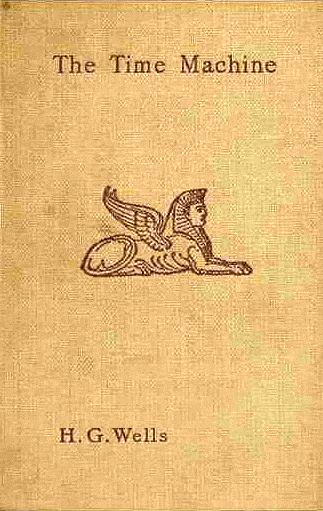
Why was there a stature of a Sphinx?  Why did Wells think that the symbolism of a Sphinx was so important that it would have survived all those centuries?  From what I read later, Wells even requested that a Sphinx be on the front cover of the first edition.  What riddle did the Time Traveler have to solve other than how to open the panels to retrieve his machine (which he never did)?

What It Made Me Feel:
I was disappointed by how the museum seemed to me to be a deus ex machina for the Time Traveler, and was quite relieved when most of the items gained from there were lost to him.

I was surprised at how sparse the action was.  I felt like there was so much more Wells could have written on the Eloi/Morlock situation.  I couldn't help but wonder what the book would've been like had Verne written it instead, with his magnificent powers of invention.

I also, quite frankly, felt that the Time Traveler should have been just a bit more upset and tried harder to find Weena.  Is that the Victorian view of Civilized Explorer and Noble Savage showing itself?

Notable Passages, Ideas or Themes:
Socialism, as I've mentioned, was a theme that Wells was attempting to portray in a positive light by showing the evil deterioration of industrialization.

Other themes were the innocence of Weena, lost to the violence of the offspring of industrialization, and the fire of civilization that ran out of control and burned the forest.  (I'm not fully certain what Wells meant by that, but it's too obvious to have been unintentional.) 

Wednesday, December 14, 2016

The Classics Club: To the Lighthouse by Virginia Woolf

(about the Classics Club)

.


I first read Virginia Woolf for a Master's class about 20 years ago, and was immediately enamored of her and her style.  Over the years, I've read most of her works, and am slowly rereading them again as the desire takes me.  I wanted to reread To the Lighthouse, as I couldn't remember much about it.


I thought again and again how easy it is to read Woolf, to sink into her prose and just flow with it.  I thought about how each character saw the same events of the day so differently, and how believable each character and their views were.  I thought about how masterful Woolf is to present a novel with nearly no dialogue or action, and almost all introspection.  I thought about how much I love her subtle shifts of perspective.  One character will be thinking and it will gradually shift into another character's thoughts in the middle of a paragraph.


Reading Woolf always makes me feel like I'm floating on the ocean, just flowing with the waves, letting the wash over me or move me along.  I simply get lost in her prose, and let her lead me where she will.  I also felt a range of emotions while reading To the Lighthouse: I teared up a few times, I laughed, I felt conflicted, I was connected to the characters and felt their varied emotions.


"To pursue the truth with such astonishing lack of consideration for other people's feelings, to rend the thin veils of civilization so wantonly, so brutally, was to her so horrible an outrage of human decency that, without replying, dazed and blinded, she bent her head as if to let the pelt of jagged hail, the drench of dirty water, bespatter her unrebuked.  There was nothing to be said."


"They came to her, naturally, since she was a woman, all day long with this and that; one wanting this, another that; the children were growing up; she often felt she was nothing but a sponge sopped full of human emotions."

". . . but most of all he hated the twang and twitter of his father's emotion which, vibrating all around them, disturbed the perfect simplicity and good sense of his relations with his mother."

"His immense self-pity, his demand for sympathy poured and spread itself in pools at her feet, and all she did, miserable sinner that she was, was to draw her skirts a little closer round her ankles, lest she should get wet."


Tuesday, September 20, 2016

The Classics Club: The Bell Jar by Sylvia Plath

(about the Classics Club)

.

This is another book that I've intended to read for some time.  I'm not sure how I missed reading it or being assigned to read it in high school, but somehow I did.  I've seen a lot of references to it lately on Instagram, so I thought now was a good time to read it.


I compared it to both Breakfast at Tiffany's  (which I disliked) and to Catcher in the Rye.  The beginning, when Esther is in New York, is what Breakfast at Tiffany's should have been.

As for comparing it to Catcher in the Rye. . . there is no comparison.  Salinger is a much better writer than Plath, with a better ability to draw the reader into the narrative.  Both are written from the first person point of view, but I found the Bell Jar to be boring at times, and yet Catcher in the Rye kept me riveted (during a reread).


I expected to be wowed by this book.  I expected to feel connected to Esther and to take her journey personally--after all, I do have some experiences in common with her.  I didn't though.  She did not appeal to me as a character; I barely sympathized with her.  I felt blase about her and her bell jar.  I certainly didn't react to her the way I did to Holden Caulfield.


Monday, September 19, 2016

The Classics Club: Peter Pan by J.M. Barrie

(about the Classics Club)

.
This classic has been on my to-read radar for many, many years.  I bought Everland, a steampunk retelling of Peter Pan, and felt that it would behoove me to read the original first.


Thinking and feeling went hand in hand for this book.  The only thing I thought or felt was: what am I missing?

This book has a such a loyal, devoted fanbase over the course of more than 100 years--so much so that there is a statue of Peter in Kensington Gardens.  And yet. . . and yet. . . I don't see the appeal.

It was an okay fairy story; were I to review it I'd probably give it three stars.  The plot wasn't as adventurous as I'd expected, nor as engaging or even interesting.  I certainly wasn't enamored of Peter, nor is he a hero to be emulated.  The other characters were okay, but not special in any way. Hook was the only one that seemed fleshed out.  Neverland--this fantasy island I'd heard so much about--wasn't very impressive.  Sure, there are "Redskins" and mermaids and pirates, but, the adventures were just not very exciting.

I fully realize that this was a play first, then it was made into a novel.  I expected that Barrie might not be as adept at description as conversation, but I can't even imagine how this would be enthralling as a play.  Is it because they fly on stage?

Truly, I'm flummoxed.  Fans of Peter Pan, shout me down and share all the magic that I am just not finding.


Thursday, September 15, 2016

Ayesha: The Return of She by H. Rider Haggard

Ayesha: The Return of She
H. Rider Haggard
3/5 stars
H. Rider Haggard

She, the first volume of the "She" stories, ends with a thrilling conclusion.  Ayesha begins shortly after that, with Leo seeing a vision of where he can find Ayesha now.  He and Horace spend 16 years hunting for the place of the vision.  Leo faces a great trial, a fantastic battle occurs, and Haggard gives another of his excellent endings.

Ayesha is not as well-plotted, nor as exciting, as She.  At times, it seemed to lag, and I even found my attention roaming a bit in the middle.  The divinity and mortality of Ayesha , to my disappointment, was not resolved.  What I would really have liked was more of the 16 years of travel, and less of the daily life in the College of Hess.

The battle was excellent though, and the supernatural elements were just creepy enough to satisfy.  I also enjoyed the uncertainty of just where this story was going, of what Ayesha would do, and the tension this created.

I like Haggard's novels, and while this wasn't his best, it was still a good yarn.  I highly recommend She, and only then should Ayesha be read--with the understanding that it's just not as good.


Sunday, August 21, 2016

The Classics Club: Catcher in the Rye

(about the Classics Club)

.
I've had Holden on my mind for some time, so I decided it was time for another re-read.

Reading Catcher in the Rye in high school was my first experience with an unreliable narrator.  I can still remember how my mind was blown when the teacher explained that not all narrators can be trusted.


I thought a lot about how amazing Salinger is.  Reading Catcher in the Rye is like having a conversation with Holden.  The flow, the speech patterns, the rambling. . . It's eerily real.  Also, the use of italics to emphasize parts of words ("I'd only written that. .. ") is brilliant.  Why don't more authors use this?

I immediately fell under Salinger's spell, from the first sentence, and I wondered why I don't read him more frequently.  I've not read all of the Nine Stories, nor have I read Raise High the Roof Beam, Carpenters and Seymour: An Introduction.  Rereading this made me want to immerse myself in Salinger, and finish them all.

Reading this also made me want to read Ring Lardner and reread Out of Africa and the Return of the Native, since Holden enjoyed them some much.

I also wondered if Holden's voice is so typically American that it is hard for other cultures to relate to him.  

I wondered about the ending, too.  If Salinger copped out a bit by not describing "what I did after I went home".  I talked it over with Bryan and with his help, decided that, no, it was actually a wise move by Salinger and that the novel would have been weaker if all "that stuff" had been described.


 I want to help Holden every time I read this.  He is alive to me, and I ache for him.  This time, though, I'm reading it a few years after my own emotional difficulties, and it was nearly painful to read.  I've never connected with Holden in a personal way before, just felt empathy.  This time. . . I understood his motives and actions intimately, and it hurt.


I flagged favorite passages during this reread.  When I was finished, I had 31 pages marked.  Here are a few that really stand out.
Note:  You'll may not get enjoyment out of a few of these passages unless you've read the book.  Some are notable simply because they are typical Holden statements.

"What really knocks me out is a book that, when you're all done reading it, you wish the author that wrote it was a terrific friend of yours and you could call him up on the phone whenever you felt like it.

"New York's terrible at night when somebody laughs on the street very late at night.  You can hear it for miles.  It makes you feel so lonesome and depressed."

"Grand.  There's a word I really hate.  It's a phony."

"That's the whole trouble.  You can't ever find a place that's nice and peaceful, because there isn't any.  You may think there is, but once you get there, when you're not looking, somebody'll sneak up and write 'Fuck you' right under your nose."

"When I really worry about something, I don't just fool around.  I even have to go to the bathroom when I worry about something.  Only I don't go.  I'm too worried to go."

"The thing with kids is, if they want to grab for the gold ring, you have let them do it. If they fall off, they fall off, but it's bad if you say anything to them."


Sunday, July 24, 2016

Sunday Salon: The Little Prince

Musing for this week's Sunday Salon.

This week I started reading the Little Prince by Antoine de Saint-Exupéry.

I'm about to make a lot of people upset, but. . . 


I didn't really like it.  

I went into the experience with high expectations, due to the devotion this book engenders.  I kept waiting to be charmed and awed, but I never was.  I made it about a quarter of the way through, and dreaded having to go back to it, so I gave up.  

I don't know what exactly about it I didn't like, only that I didn't like it.  

One smallish thing that colored my view of the book was this:  I think he got sheep and goats mixed up.  Sheep don't eat everything, like he said.  The eat grass and clovers and the like.  Goats eat EVERYTHING and would have had no trouble eating the baobab shoots.  I found this most distracting!

Then there was the shifting of point of view.  Sometimes the pilot is talking to the reader, and sometimes to the Little Prince.  This kept the narrative from running smoothly and drove me batty.

On the positive side, I loved the artwork.  It was enchanting and appealing--like I expected the prose to be.

Have you read it?  Did you love it?  What am I missing?  Why is this a classic of children's literature?

Anyone got answers for me?

Monday, July 4, 2016

The Classics Club: Excellent Women by Barbara Pym


(about the Classics Club)

.
This is another classic I found while browsing the used bookstore.  I had never heard of Barbara Pym, but Excellent Women looked interesting, so I bought it.  Afterwards, I found that it was considered to be a modern classic, and therefore perfect for the Classics Club.

What caught my interest about this book was that one reviewer mentioned that she was a 20th century Jane Austen.  Austen being my favorite author, I was intrigued.  I have to say, I was not disappointed.  Excellent Women is a social commentary as well as a light comedy, with a gentle style of storytelling.  I was reminded at times of Mansfield Park and other times of Pride and Prejudice, but Excellent Women was never a copy of Austen.  

The "excellent women" are those spinsters over 30 who find themselves involved in all sorts of doing-good, from interfering in marriages to working in church bazaars.  While most of the characters were condescending to the excellent women, Pym shows a great sympathy towards them.  (Could this be that she, too, was an over 30 spinster?)   It is told from the first person point of view of Mildred, one of the excellent women, and this was perfectly done, with Mildred's voice being well-defined.


I thought about the resemblance to Austen, of course.  I also thought about the plight of those excellent women, and pitied them deeply.  The ending brought me up short, and I realized that I had thought all along that it would end (I'm trying not to spoil anything here) with a more fairy-tale ending.  Instead, Pym made the ending quite real.


Well, to be quite honest, the first thing that comes to mind is  how much I needed a cup a tea while reading this.  Mildred makes a lot of tea throughout this book and it always made me crave a cuppa.

I didn't have any deep feelings while reading this book.  It was just an enjoyable read through and through.


"I did not then know to the extent I do now that practically anything may be the business of an unattached woman with no troubles of her own, who takes a kindly interest in those of her friends."

" 'Esther Clovis is certainly a very capable person.' he said doubtfully.  'An excellent woman altogether.'
'You would consider marrying an excellent woman? I asked in amazement. 'But they are not for marrying.' . . . 'They are for being unmarried.' I said, 'and by that I mean a positive rather than negative state.' "


Tuesday, June 28, 2016

the Classics Club: Life and Death of Harriett Frean

(about the Classics Club)

Life and Death of Harriett Frean
May Sinclair

.

 I live in a university town, and as a result there is often obscure classics available at the used book store.  I tend to browse the literary classics/fiction aisle of our looking for the green spines of the Virago Modern Classics volumes.   That was how I found this book.  Reading the back, I saw her style was compared to that of Virginia Woolf, one of my favorite authors.  This was enough for me.


This book is about a Victorian woman, brought up to be "morally beautiful" and to deny herself even little pleasures in order to achieve this beauty.  The result was a selfish, narrow woman, proud of herself and her nonexistent achievements.  For example, she turned down a man she loved because he was engaged to a friend.  She saw this as a "morally beautiful" act, and prided herself on it for decades.  The reader, and eventually Harriett, was able to see how this self-indulgent sacrifice ruined the lives of others.  Reading this, I thought a lot about how pride and vanity can be hidden under a guise of righteousness.

I also thought a lot about how similar the stream of consciousness style was to Woolf, though when I researched Sinclair I found that she is may have used that style first.  This novel contains few descriptive passages and not much action, with most of the book being thoughts or conversations.  It was immensely effective for telling her life.


May Sinclair
I felt sad for Harriett.  She watched life go by and spent much time regretting the past, even though she thought of it only as reminiscing.

I also felt glad I had read it.  I liked Sinclair's style very much and would like to find more of her works to read.  I would certainly recommend this book to those fond of Woolf's novels.


I think Sinclair wanted to show the reader the danger of  pretending there is no ugliness in the world, and also the hypocrisy that can hide behind a self-sacrificing nature.


My review for Amazon:
Life and Death of Harriett Frean follows, as one might expect, the early life through to the death of Harriett Frean.  She was brought up to be a perfect Victorian lady, and taught early on to be "morally beautiful", which in turn led her to become prideful in any little self-sacrifice she made.  As a result, she lived a narrow existence, self-righteously congratulating herself on how she lived her life.

There is very little descriptive passages or even action.  Instead, the story is told mainly in thoughts and conversation, in the stream-of-consciousness style.  This is extremely effective in telling Harriett's story.

It is a short book, and easy to read, but still manages to be quite thought provoking.  I recommend it for anyone who enjoys a stream-of-consciousness narrative; other readers might not find it as engrossing.


Wednesday, October 9, 2013

The Classics Club: Breakfast at Tiffany's

(about the Classics Club)

.
I first read "Breakfast at Tiffany's" in high school, after I saw and fell in love with the movie.  I found the novella a sad disappointment, as it wasn't like the movie, so promptly pushed it out of my mind.

As an adult, I wasn't so impressed with the movie--the horrible portrayal of Mr. Yunioshi in particular and pretty much everything else in general--so I began to think maybe I needed to reread the novella and see what Capote really intended.

I'll confess, I'm just as unimpressed as I was some twenty years ago, though not for the same reasons.


Frankly, very little.

Louise Brooks
I did think that Holly looked (not at all like Audrey Hepburn, but) like a blonde Louise Brooks, with even fuller lips.  The description of her resembled Hepburn in no way whatsoever; I can't imagine why she was cast.  Having set it in the present day when they filmed it, the clothing and manners were all wrong in the movie as well; I was glad that I had the knowledge to be able to imagine the right clothing, hair styles and props that were suitable for the story.

I also thought what an unappealing character Holly was.  I had no sympathy for or connection with her at all, nor did I find the plot particularly interesting.

Capote's prose was fine, but not stellar, certainly not captivating enough to make this (to my mind) a classic.


With the exception of the final line, which generated a small bit of emotion due to Capote's obvious attempts to twang the heartstrings, I was unmoved.  Again, I'll say that neither plot nor characters interested me enough to have any feelings for them.


I'm sure Capote had a message or an impression he wanted left with the reader, but I was unable to find it.  I was not a good match for this book.  

To show just how unmemorable "Breakfast at Tiffany's" was to me, I will mention that I forgot it even existed in my literary world. I read it in mid-to-late September, but was so unmoved by it that I didn't add it to my list of books read and didn't think of writing up the notes until now.

Thursday, September 26, 2013

The Classics Club: 1984

(about the Classics Club)

.
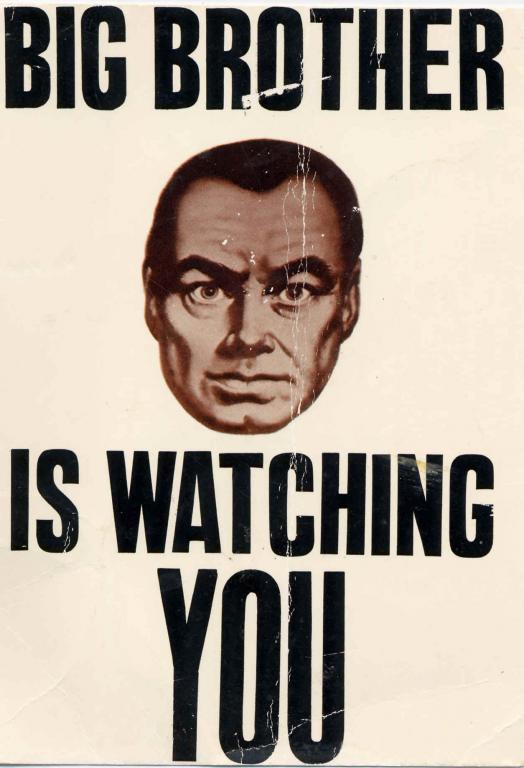
1984 is one of those classics about which references are always being made, and it seems like everyone has a general idea of the plot, whether or not they've read it.

I knew it was one that I needed to read, but had always put it off, thinking it would be too depressing.  I am so glad I finally read it and recommend it wholeheartedly.  If you've not read it, make this the next book you do read!


While Orwell's dystopia is a terrible place, the book was not so much distressing as thought-provoking.  Like Bradbury's Fahrenheit 451, I also found it disturbingly prophetic.  NewSpeak made me think of the horrible text message shorthand, and the Ministry of Peace was frighteningly similar to the way current governments present the need for war.  As for the Two Minutes Hate. . . How often have we seen a more subtle version of this in the recent past?!

I thought a great deal about how easily people can be "brain-washed" into living in horrid situations or doing vile acts by the government or other powerful institutions--good people, too, with honest intentions who think they are doing the right thing.

I thought about the fact that Orwell wrote this not long after the ending of World War II, and how Hitler's Germany must have been foremost in his mind.

I also thought about the control of history; the victors always write (and sometimes rewrite) history.  This is nothing new, and continues to this day.


 I felt frightened at times, by how similar some of the situations were to today's society.

I was enthralled by Orwell's prose; I had expected it to be dusty, dry, and yet it was alive and relevant.

I felt so much sadness for Winston; he was so real to me that I was emotionally invested in his journey.

I did feel confused by the Party requirements, and struggled to comprehend it fully.  I felt that it would have been better if Orwell had given that explanation early in the book, and more completely.  However, who am I to judge?!  I assume he had an excellent reason for waiting as long as he did, and my lack of understanding  was the fault of the reader, not the writer.


"The horrible thing about the Two Minutes Hate was not that one was obliged to act a part, but that it was impossible to avoid joining in."


"Nothing was your own except the few cubic centimeters inside your skull."

"If the Party could thrust its hand into the past and say of this or that event, it never happened — that, surely, was more terrifying than mere torture and death?"

"The object of waging a war is always to be in a better position in which to wage another war."

"A peace that was truly permanent would be the same as a permanent war. This—although the vast majority of Party members understand it only in a shallower sense—is the inner meaning of the Party slogan: War is Peace."

"All rulers in all ages have tried to impose a false view of the world upon their followers."

"We know that no one ever seizes power with the intention of relinquishing it. Power is not a means; it is an end. One does not establish a dictatorship in order to safeguard a revolution; one makes the revolution in order to establish the dictatorship. The object of persecution is persecution. The object of torture is torture. The object of power is power."


"WAR IS PEACE
FREEDOM IS SLAVERY
IGNORANCE IS STRENGTH"


Tuesday, July 23, 2013

The Classics Club: The Thirty-Nine Steps

(about the Classics Club)

.
Despite never actually having read Buchan's The Thirty-Nine Steps (1915), I was familiar with it as one of the earliest hero-on-the-run suspense-thriller-mysteries, and one that was influential on the genre as a whole.  I take a historical interest in my favorite genre, and felt I needed to read it.


What a grand adventure!  I had to think that this is the precursor to those heroes so prevalent in today's thrillers (you know, the ones that get out of bed, get beat up, shot, drowned and beat up again all before they take the dame back to bed) but yet it didn't seem hokey.  Hannay was just this side of believable, like a hero should.  He was crush-worthy for the female reader and role model-worthy for the males.

The action of this book takes place just before the Great War starts (but is written after the War started, so it is written with the knowledge that the War will start, if that makes sense) so it also made me think a lot about the War, about patriotism during that War, and about how this book would have been the most excellent sort of propaganda.  It depicts an average man who realizes the fate of Great Britain, if not the world, rests on knowledge he has, so he steps up to the plate and does what he can.  I hate to borrow the overused phrase "stiff upper lip" for Blighty, but that is exactly it. Hannay is willing to die--even as an expatriate Scotsman just over from Rhodesia--to protect home and country.  Just an average guy (okay, maybe a little above average in strength and endurance but we'll not quibble) and he single-handedly beats the Germans at their own game.  Pretty good stuff to be reading in the muddy, infected, hell-on-earth trenches.

So yes, I started thinking about what a fun adventure it was, and ended by mourning the slaughtered Tommys who probably died a little happier for having read this.


 I suffered nostalgia for a time I've never experienced--that time, right before the Great War, when a speeding car went 40 mph and putting on working man's clothing could disguise a gentleman, when airplanes were a novelty and to be hatless was unconscionable.   I felt sad for the innocence that was lost in that War, sad that books like this--new as it was--would only have a few more years to exist, a few more years before violence and sex become the staples of fiction.  (Let me note here that there is no romance in this book--not even one slightly attractive woman.  How refreshing!)

I felt patriotic, too, for a country that isn't mine, for a cause that is hard to remember.

I also felt a longing for Scotland.  Apparently Buchan was Scottish; his descriptions of Scotland are lovely.  I've always wanted to visit and the mental images of Hannay's on-foot adventures to the highlands (or was it the lowlands?) added fuel to that flame.

Most of all, though, I felt satisfied by a good read.  It was a darn good yarn, and I enjoyed every moment of it--and for some reason, especially the ginger biscuits.  I'll never eat gingersnaps without thinking of Hannay hiding in the heather, munching on ginger biscuits.


Patriotism!  This was the subtle undertone and blatant overtone throughout the entire book.  Even an expatriate will answer the call to save Great Britain when it comes, because of natural patriotism.

 It is a level of dedication and love for country that I don't think we, in the U.S., will ever experience again. As such, it was almost a novel idea to me, here in this skeptical, cynical age.